Skip to content

Top 10 Hospital Monitor Manufacturers in China

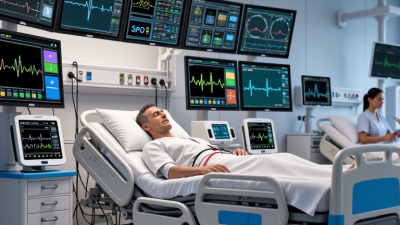
Choosing a hospital monitor is a practical decision with consequences for daily care. A clear display, dependable alarms, and easy-to-clean controls can matter as much as a long feature list. China has manufacturers serving different hospital needs, from bedside monitoring to transport and intensive care. Their product ranges, service networks, and technical documentation can vary considerably.

This guide introduces ten Chinese manufacturers and offers a starting point for comparing them. It considers product coverage, stated technical capabilities, quality documentation, customer support, and experience in medical equipment. Buyers should examine specific models, not just company profiles. Check ECG, SpO₂, non-invasive blood pressure, temperature, battery life, screen readability, alarm settings, and data connectivity against actual clinical workflows. Small details matter. A bright screen may be easier to read under ward lighting, while a confusing menu can slow routine checks.

No list can determine the right choice for every facility. Some claims need careful verification, and manufacturer information may not tell the whole story. Request current specifications, service terms, and relevant quality documents directly from each supplier. Where possible, arrange a product demonstration and involve clinical and biomedical engineering staff. This overview is intended to support informed research, not replace professional evaluation. A shortlist is only a starting point.

Top 10 Hospital Monitor Manufacturers in China

Hospital Monitors Explained: ECG, SpO₂, NIBP, Respiration, and Temperature

A hospital monitor turns several body signals into a live bedside picture. ECG electrodes track electrical activity and can reveal rhythm changes, while SpO₂ estimates blood oxygen using a light sensor clipped to a finger. The World Health Organization’s 2021 cardiovascular disease fact sheet reports about 17.9 million cardiovascular deaths annually. That burden explains ECG’s importance, but a monitor reading alone cannot diagnose the cause of an abnormal rhythm. Context matters.

NIBP uses an inflatable cuff to estimate systolic and diastolic pressure; movement or a poorly fitted cuff can distort results. WHO’s 2023 Global Report on Hypertension estimates that 1.28 billion adults aged 30–79 have hypertension worldwide. Repeated, correctly taken readings are more useful than one isolated number. Respiration may be measured through chest movement or changes in ECG impedance, so talking, shivering, or loose sensors can affect the displayed rate.

Temperature completes the basic vital-sign set, often through a probe placed at the skin or another measurement site. Small differences in placement can matter. SpO₂ also deserves caution: the US Food and Drug Administration notes that circulation, skin temperature, nail polish, and skin pigmentation may affect readings. A number can look precise and still be wrong. Clinicians should compare trends with the patient’s appearance and symptoms, and check the sensor when the figures do not fit.

Hospital Monitors Explained: Core Vital-Sign Parameters

Representative reference intervals for resting adults. Each mini-chart uses its own scale and unit.

ECG Heart Rate · 60–100 bpm

SpO₂ · 95–100%

NIBP Systolic · 90–120 mmHg

NIBP Diastolic · 60–80 mmHg

Respiration · 12–20 breaths/min

Temperature · 36.1–37.2 °C

ECG monitors electrical heart activity; SpO₂ estimates blood oxygen saturation; NIBP measures blood pressure without an arterial line; respiration and temperature provide additional vital-sign measurements. Reference intervals vary with age, measurement method, and clinical context and are not a substitute for medical assessment.

China’s 2023 Hospital Base: 38,355 Hospitals and Monitor Demand

China recorded 38,355 hospitals in 2023, according to the National Health Commission’s Statistical Bulletin on China’s Health Development. The same bulletin reported about 7.42 million hospital beds and roughly 3.58 billion hospital outpatient and emergency visits. These figures describe a large, active care network—not a direct count of monitor purchases. Still, more beds and patient encounters create practical demand for reliable vital-sign monitoring across wards, emergency rooms, and intensive care units.

The 2024 China Health Statistical Yearbook also documents the scale of the country’s healthcare infrastructure using 2023 data. For procurement teams, national totals are only a starting point. A county hospital may need durable bedside units and straightforward service support; a tertiary center may require network integration and more advanced monitoring. Details matter. A monitor must remain readable under bright ward lighting, with cables arranged to avoid clutter around a crowded bed. Yet growth should not be confused with automatic replacement: existing equipment, budgets, and clinical workflows shape actual demand. The public reports do not quantify annual hospital-monitor orders, so precise market estimates need careful qualification. That gap deserves attention.

Top 10 Hospital Monitor Manufacturers in China - China’s 2023 Hospital Base: 38,355 Hospitals and Monitor Demand

China reported 38,355 hospitals in 2023. The table below summarizes common hospital monitoring applications and procurement considerations; it does not rank or identify manufacturers, and the hospital count is not an estimate of monitor purchases.

No. Care Area Common Monitor Type Typical Measurements Relevant Procurement Considerations
1 Intensive Care Unit (ICU) Bedside multiparameter monitor ECG, heart rate, SpO₂, respiration, blood pressure, temperature; optional invasive pressure and EtCO₂ Continuous monitoring, alarm configuration, parameter options, and connection to a central station
2 Operating Room Anesthesia monitor ECG, SpO₂, blood pressure, respiration, EtCO₂, and anesthetic gas measurements where configured Compatibility with the anesthesia workflow, gas modules, and readily viewable alarms
3 Post-Anesthesia Care Unit (PACU) Bedside multiparameter monitor ECG, SpO₂, non-invasive blood pressure, respiration, and temperature as clinically indicated Clear alarm presentation and suitability for recovery-area observation
4 Emergency Department Bedside or transport monitor ECG, heart rate, SpO₂, and non-invasive blood pressure; additional parameters as needed Fast patient setup, portability where required, and support for urgent assessment
5 General Medical and Surgical Wards Spot-check or bedside monitor Commonly SpO₂, pulse rate, and non-invasive blood pressure; ECG monitoring when indicated Ease of use, cleaning, battery operation, and fit with ward observation routines
6 Cardiac Care Unit Continuous ECG monitor ECG waveforms, heart rate, arrhythmia analysis, and additional bedside parameters as configured ECG lead options, alarm review, trend display, and central monitoring connectivity
7 Neonatal Intensive Care Unit Neonatal bedside monitor ECG or heart rate, neonatal SpO₂, respiration, and blood pressure as clinically indicated Neonatal accessories, appropriate alarm settings, and suitability for small patients
8 Labor and Delivery Maternal monitor Maternal ECG, SpO₂, and blood pressure; fetal heart rate and uterine activity are monitored with dedicated obstetric equipment Clear distinction between maternal and fetal monitoring functions and compatible accessories
9 Inter-Hospital or Intra-Hospital Transport Portable transport monitor ECG, SpO₂, and non-invasive blood pressure; other measurements depend on patient needs Battery duration, portability, secure mounting, and continuity of monitoring during transfer
10 Central Monitoring Station Networked central surveillance system Displays data and alarms received from compatible bedside monitors Interoperability, network reliability, alarm management, and clinical workflow integration

Safety and Compliance: IEC 60601-2-49:2018 and NMPA Registration

When comparing hospital monitor manufacturers in China, safety claims need more than a brochure. IEC 60601-2-49:2018 sets particular requirements for multifunction patient monitoring equipment. It is used alongside the applicable general and collateral medical electrical safety standards. The standard is relevant to systems that combine measurements such as ECG, oxygen saturation, and blood pressure.

Details matter.Buyers should check test evidence for the actual monitor configuration, including alarms, electrical safety, and electromagnetic compatibility. A standards report does not, by itself, prove that every sensor, accessory, or software version performs identically. That distinction is easy to blur.

NMPA registration is a separate check. Regulatory requirements depend on the product’s classification and intended use, so confirm the current status for the specific model in China. Compare the registration information with the device label, configuration, and claimed functions. Ask how design changes are reviewed and documented. A neat certificate is useful, but it cannot answer every practical question. During evaluation, test alarm behavior and readings under realistic ward conditions; paperwork may not reveal small usability problems.

Ten Chinese Manufacturers: Mindray, EDAN, Comen, Biolight, and Others

China’s hospital-monitor market includes manufacturers with different strengths in bedside monitoring, transport systems, and central stations. The ten commonly considered domestic suppliers do not offer identical product ranges. Some focus on practical ward use, while others provide broader monitoring platforms for intensive care and emergency departments.

Clinical fit matters more than a catalogue headline. Check whether a monitor displays the parameters your team routinely needs, such as ECG, oxygen saturation, non-invasive blood pressure, and temperature. Look closely at screen readability under bright ward lighting. Test alarm volume near a busy nursing station. Small interface delays can become frustrating during a crowded shift. Details matter.

Procurement teams should review device specifications, service coverage, training plans, and compatibility with existing workflows. Request demonstrations using realistic patient scenarios, not only prepared slides. Ask how staff can customize alarm limits and export records. Confirm which accessories and consumables are supported, and whether replacement parts are readily available. Independent clinical and biomedical-engineering review can reveal practical gaps before purchase. Specifications alone cannot predict every workflow issue; local trials are useful, though they may not represent every department or patient population.

Comparing Monitor Specifications: Parameters, Alarms, Connectivity, and Use Cases

When comparing hospital monitors from Chinese manufacturers, begin with the parameters each model measures. Common options include ECG, oxygen saturation, non-invasive blood pressure, temperature, and respiration.

Check how many waveforms can appear together and whether readings remain clear from a few steps away. A transport monitor may need a compact screen and dependable battery life; a bedside unit may require more channels and trend review.

Small details matter. Probe compatibility and measurement intervals can affect everyday workflow.

Alarm behavior deserves equal attention. Review adjustable limits, audible levels, visual signals, and whether staff can distinguish a critical alert from a routine one.

Connectivity should also match the hospital’s actual systems: ask about network interfaces, data export, and compatibility testing rather than relying on a broad “connected” claim.

In a busy ward, delayed or incomplete records create real friction.

Still, a polished specification sheet can flatter a device. It cannot show how easily nurses silence, acknowledge, and interpret alerts during a crowded shift.

Request a practical demonstration using the intended clinical setup, and note where the workflow feels awkward.