Skip to content

10 Best Hospital Monitors for Hospitals Worldwide?

Choosing the right hospital monitor can influence patient safety, clinical decisions, and staff confidence.
This guide examines 10 best hospital monitors for hospitals worldwide, with practical differences in mind.
A hospital monitor must display vital signs clearly, respond quickly, and support reliable bedside care.

In a busy ward, nurses may read oxygen saturation beside a dim bed at 3 a.m.
Alarms should be noticeable without creating unnecessary noise.
That balance matters.
We consider ECG accuracy, blood pressure performance, temperature sensing, SpO₂ reliability, alarm management, and screen visibility.
We also review battery life, connectivity, cleaning requirements, mobility, and maintenance support.
These details often matter more than impressive specifications.

Our comparison draws on manufacturer documentation, clinical expectations, safety standards, and real-world workflow considerations.
Where available, regulatory clearance and independent validation can strengthen confidence.
However, published claims do not always reflect every hospital environment.
A monitor performing well in a modern intensive care unit may struggle in a rural clinic.
That limitation deserves attention.
Budget, staffing, network infrastructure, and local service access can change the final choice.
We therefore avoid treating one model as universally perfect.
Instead, this overview highlights useful strengths, possible weaknesses, and questions purchasing teams should ask.
The goal is a dependable shortlist, not a careless ranking.
Clinical leaders should confirm compatibility with local protocols before purchasing.

10 Best Hospital Monitors for Hospitals Worldwide?

What Hospital Monitors Are and How They Support Patient Care

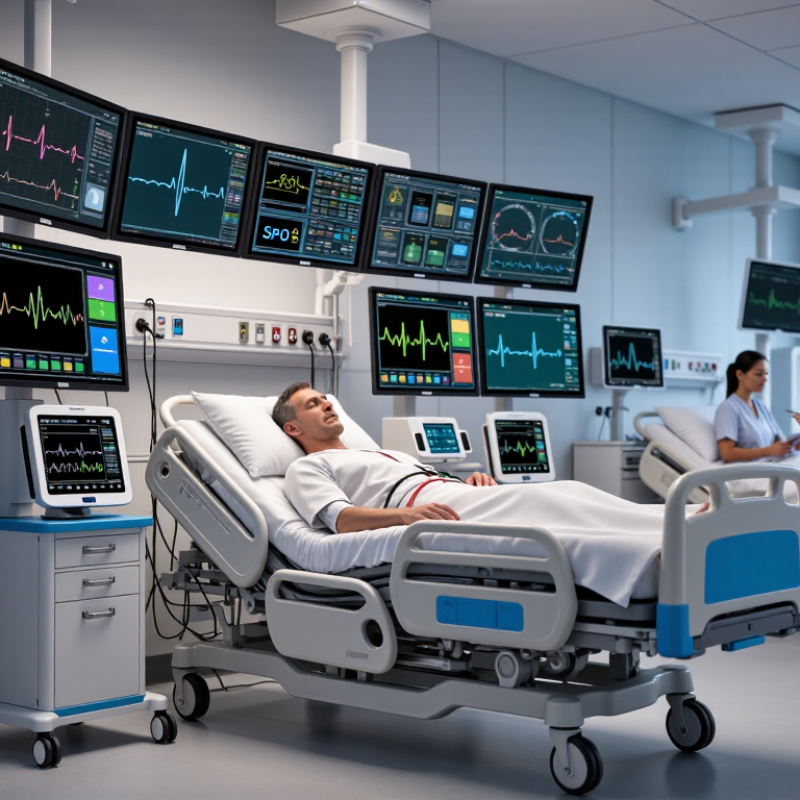
Hospital monitors are clinical systems that display changing signs of a patient’s condition. They commonly track heart rhythm, oxygen saturation, blood pressure, temperature, and breathing rate. Some also measure carbon dioxide levels or invasive pressures. A bedside screen may show several waveforms at once, helping clinicians notice deterioration earlier. Small signals matter.

These devices support patient care by turning repeated measurements into visible trends. A nurse can compare oxygen levels over time, not just read one number. Physicians may use rhythm changes, falling blood pressure, or faster breathing to guide further assessment. Alarms can draw attention during busy shifts, especially when a patient cannot describe symptoms. However, numbers can mislead. Motion, loose sensors, poor circulation, or incorrect placement may create false readings. Clinical judgment remains essential.

Reliable monitoring depends on trained staff, appropriate alarm limits, regular maintenance, and careful cleaning between patients. Experienced clinicians confirm unusual results manually when possible. They also consider pain, medication, recent procedures, and the patient’s overall appearance. Alarm fatigue remains a real weakness in crowded wards. Too many alerts may cause important warnings to blend into background noise. Better practice means reviewing settings for each patient, documenting changes, and questioning data that does not match the bedside picture. A monitor supports decisions; it should never replace observation, communication, or professional responsibility.

10 Best Hospital Monitors for Hospitals Worldwide? — What Hospital Monitors Are and How They Support Patient Care

Hospital monitors continuously display vital signs that help clinicians recognize changes in a patient’s condition. The chart compares the relative span of commonly used adult resting reference intervals. Values are educational references, not universal alarm limits; local clinical protocols may differ.

Reference intervals used: heart rate 60–100 bpm, respiratory rate 12–20 breaths/min, oxygen saturation 95–100%, systolic blood pressure 90–120 mmHg, and body temperature 36.5–37.5 °C.

Key Types of Hospital Monitors Used in Modern Healthcare

Modern hospital monitoring begins with patient needs, not a shopping list. The ten essential types include multiparameter bedside monitors, ECG monitors, pulse oximeters, non-invasive blood pressure monitors, capnography systems, telemetry units, fetal monitors, neonatal monitors, invasive hemodynamic monitors, and central monitoring stations. Each captures a different clinical signal. A pulse oximeter may show oxygen saturation, while capnography reveals ventilation changes earlier.

WHO’s Global Patient Safety Report 2024 estimates that one in ten patients experiences harm in healthcare, with more than half considered preventable. This makes accurate monitoring and usable alarms critical. In practice, nurses need clear waveforms, adjustable thresholds, battery reliability, and simple cleaning procedures. Too many alarms create noise.

Alarm fatigue remains a serious design concern. ECRI’s 2024 Top 10 Health Technology Hazards places poor alarm management among major patient-safety risks. A monitor with every feature is not always the best monitor. In a crowded emergency room, a bright display and rapid trend review may matter more than advanced analytics. In intensive care, invasive pressure monitoring and continuous ECG may be essential. Rural hospitals may prioritize durable vital-sign monitors and remote connectivity. Small details matter.

Selection also requires local testing. Staff should compare false alarms, sensor replacement needs, data integration, and training time. Some specifications look impressive on paper. They can fail during a night shift. WHO data supports vigilance, but real-world observation must guide final decisions.

Ten Leading Hospital Monitors for Hospitals Worldwide

Ten Leading Hospital Monitors for Hospitals Worldwide

Hospitals worldwide need monitoring systems that fit real clinical pressure, not only impressive specifications. The ten leading categories include multiparameter bedside monitors, ECG monitors, pulse oximeters, non-invasive blood pressure monitors, invasive pressure monitors, capnography units, fetal monitors, telemetry systems, central stations, and transport monitors. Each device supports a different decision, from detecting arrhythmias to tracking oxygen changes during transfer. In my experience, clear waveforms and fast setup often matter more than a crowded screen.

WHO’s Global Patient Safety Action Plan 2021–2030 reports that about one in ten patients is harmed during healthcare delivery. Reliable monitoring can reduce delayed recognition, but it cannot replace trained staff. ECRI’s 2024 health technology safety guidance continues to highlight alarm fatigue as a serious concern. Excessive alerts may hide a genuine emergency. Hospitals should therefore assess alarm thresholds, battery duration, sensor compatibility, cybersecurity, and cleaning workflows before purchasing.

MarketsandMarkets’ 2024 analysis identifies multiparameter monitoring as a major hospital technology segment, supported by rising critical-care demand and remote observation. Yet market growth does not guarantee clinical value. A transport monitor may fail if its handle is awkward or its battery estimate is optimistic. That detail is easy to overlook. Procurement teams should test devices beside real beds, with gloved hands, dim lighting, and moving patients. The best global choice is not always the most advanced model.

How to Compare Hospital Monitor Features and Performance

Comparing hospital monitors requires more than counting displayed parameters. A reliable evaluation begins with the clinical setting, patient acuity, and staff workflow. Intensive care units may need continuous ECG, oxygen saturation, invasive pressure, temperature, and respiratory trends. General wards may prioritize simple controls, clear alarms, and long battery life. No monitor wins every setting.

Performance should be tested at the bedside, not judged from a specification sheet alone. Check measurement stability during movement, weak signals, and changing patient conditions. Compare alarm speed, volume adjustment, and false alarm frequency. Excessive alarms can distract nurses and delay important responses. Screen brightness matters under both dim night lighting and strong daytime light. Touch controls should remain usable with gloves.

A strong comparison also examines data transfer, cybersecurity controls, cleaning resistance, and service support. Confirm whether records integrate accurately with clinical systems. Test recovery after power loss. Small delays can matter. Ask biomedical engineers about calibration intervals and replacement parts. Staff feedback often reveals problems that laboratory testing misses. I have seen technically impressive devices perform poorly when menus are confusing. That weakness is easy to underestimate. A practical scorecard should combine clinical accuracy, usability, maintenance demands, and total operating cost.

10 Best Hospital Monitors for Hospitals Worldwide? - How to Compare Hospital Monitor Features and Performance

Monitor Profile Recommended Care Area Display Standard Parameters ECG Capability SpO₂ Performance Non-Invasive Blood Pressure Advanced Measurements Battery Runtime Connectivity Best Performance Attribute
Profile 01 Adult ICU 15–17 in, 1280 × 1024 or higher ECG, HR, SpO₂, NIBP, respiratory rate, temperature 3/5-lead ECG; arrhythmia and ST analysis 70–100% range; typically ±2% in the stated accuracy range Adult and large adult cuffs; automatic, manual and STAT modes Invasive pressure, cardiac output and capnography options 4–6 hours Bedside network, central station, HL7 or hospital middleware High-acuity continuous surveillance
Profile 02 General Ward 10–12 in, 1024 × 768 or higher SpO₂, NIBP, pulse rate, respiratory rate and temperature 3-lead ECG; basic heart-rate monitoring 70–100% range; typically ±2% in the stated accuracy range Adult, pediatric and neonatal cuff selection Optional capnography on selected configurations 3–5 hours Wi-Fi or wired Ethernet; electronic medical record export Simple operation and efficient spot checks
Profile 03 Emergency Department 12–15 in, high-brightness LCD ECG, SpO₂, NIBP, temperature and respiration 3/5-lead ECG; defibrillation-proof input Motion-tolerant measurement; typically ±2% from 70–100% Rapid inflation and automatic repeat measurements Capnography and invasive pressure options 4–8 hours Wireless transfer, barcode workflow and central monitoring Fast patient assessment and transport readiness
Profile 04 Operating Room 15–19 in, wide viewing angle ECG, SpO₂, NIBP, invasive pressure, temperature and respiration 5-lead ECG; ST and arrhythmia analysis Continuous waveform display; typically ±2% from 70–100% Adult, pediatric and neonatal measurement modes Mainstream or sidestream capnography; multiple invasive pressures 2–4 hours Network export, accessory interfaces and alarm integration Comprehensive anesthesia and surgical monitoring
Profile 05 Neonatal Intensive Care 10–15 in, low-light viewing mode ECG, SpO₂, NIBP, respiration and temperature 3/5-lead ECG with neonatal electrodes Neonatal sensor support; typically ±3% from 70–100% Neonatal cuff range with reduced inflation pressure Dual-temperature monitoring and optional capnography 3–5 hours Central station, alarm forwarding and electronic records Low-pressure neonatal measurements and quiet alarms
Profile 06 Pediatric Care 10–15 in, touchscreen interface ECG, SpO₂, NIBP, respiration and temperature 3/5-lead ECG; pediatric alarm limits Pediatric sensors; typically ±2% from 70–100% Neonatal, pediatric and adult cuff profiles Optional capnography and dual-channel temperature 4–6 hours Wired or wireless data transfer with user authentication Flexible age-specific configuration
Profile 07 Transport and Ambulance 8–12 in, sunlight-readable display ECG, SpO₂, NIBP, respiration and temperature 3/5-lead ECG; defibrillator synchronization option Motion-resistant monitoring; typically ±2% from 70–100% Automatic, manual and STAT modes Optional capnography and external defibrillation interface 6–10 hours Bluetooth, Wi-Fi or cellular gateway options Portable design, shock resistance and long battery life
Profile 08 Step-Down Unit 12–15 in, multi-waveform display ECG, SpO₂, NIBP, respiration and temperature 3/5-lead ECG; arrhythmia detection Continuous monitoring; typically ±2% from 70–100% Scheduled, manual and STAT measurements Optional invasive pressure and capnography 4–6 hours Central monitoring, nurse-call integration and HL7 export Balanced acuity, usability and monitoring capacity
Profile 09 Cardiac Care 15–19 in, high-resolution waveform display 12-lead ECG, SpO₂, NIBP, respiration and temperature 12-lead diagnostic ECG; ST and arrhythmia analysis Continuous waveform and trend review; typically ±2% Adult cuff range with beat-to-beat trend review Invasive pressure and cardiac output options 3–5 hours Central station, ECG export and clinical information systems Detailed ECG analysis and cardiovascular trends
Profile 10 Outpatient and Day Surgery 8–12 in, compact touchscreen SpO₂, NIBP, pulse rate, ECG and temperature 3-lead ECG; basic rhythm monitoring Spot-check and short-term monitoring; typically ±2% Adult and pediatric cuffs; automatic interval mode Optional capnography for procedural sedation 4–8 hours USB, Wi-Fi or wired export depending on configuration Low footprint, rapid cleaning and quick patient turnover

Note: Performance values are representative clinical-monitor specifications and should be verified against the manufacturer’s instructions for use, applicable regulatory clearance, sensor type, patient category and local hospital requirements. SpO₂ accuracy is commonly specified for the 70–100% saturation range and may vary by sensor and motion conditions.

How Hospitals Can Choose the Right Monitoring System

When hospitals compare the 10 best hospital monitors, “best” should never mean most features. It should mean the safest fit for each clinical setting. An intensive care unit needs continuous ECG, oxygen saturation, invasive pressure, temperature, and configurable alarms. A general ward may need fewer parameters, longer battery life, and simpler transport. Patient acuity comes first.

WHO reports that one in ten patients experiences harm during healthcare, and more than half of this harm is preventable. Its Global Patient Safety Action Plan 2021–2030 supports systematic risk reduction. Hospitals should examine alarm visibility, data accuracy, cleaning procedures, device ergonomics, and staff training. The Joint Commission recorded 98 alarm-related events from 2009 to 2012, including 80 deaths. The figures are old, but the warning remains practical.

Look closely at interoperability. Can the monitor send validated data to the clinical record without manual transcription? Test the system during network loss, low battery, motion, poor perfusion, and multiple simultaneous alarms. Confirm compliance with applicable medical-device and electrical-safety standards. Review service response times, spare-part availability, cybersecurity controls, and total ownership cost. A low purchase price can hide expensive maintenance. Our first draft might overvalue screen size and advanced analytics. That assumption deserves testing with nurses, biomedical engineers, and patients. No monitor performs well when its alarms are ignored.