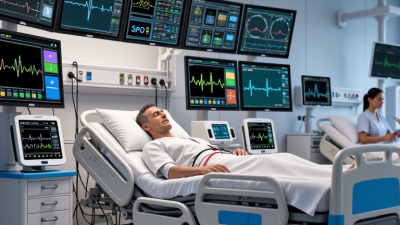
Choosing the best hospital monitor manufacturers in China requires more than comparing prices or product images. Hospitals need dependable readings, clear displays, durable materials, and responsive technical support. A hospital monitor may track ECG, oxygen saturation, blood pressure, temperature, and respiration during demanding clinical shifts. Small design details matter. For example, nurses may need readable numbers from several meters away, even under bright operating-room lights.
This introduction examines Chinese manufacturers through practical and professional criteria. These include manufacturing experience, product quality systems, clinical usability, certifications, software stability, and after-sales service. It also considers whether suppliers provide installation guidance, operator training, spare parts, and documented maintenance procedures. Factory audits can reveal details that brochures often omit, such as testing records, calibration routines, and assembly consistency. Not every large supplier is the right choice.
Reliability should be judged against the buyer’s actual environment. A compact monitor for an ambulance has different priorities from a bedside monitor for an intensive care unit. Buyers should request sample units, review technical files, confirm applicable regulatory approvals, and test data transmission before signing a large contract. Communication quality matters too, especially when firmware updates or replacement parts become necessary.
The word “best” remains subjective. Cost, local support, integration needs, and clinical risk can change the ranking. Some information may also require independent verification. This guide therefore focuses on transparent comparison rather than exaggerated claims. It aims to help distributors, hospital procurement teams, and healthcare professionals identify capable Chinese manufacturers with evidence, practical experience, and realistic expectations.

Hospital monitors are clinical devices that continuously measure vital signs, including heart rate, blood pressure, oxygen saturation, temperature, and respiratory rate. They convert changing physiology into visible numbers and audible alarms. In a crowded ward, a falling oxygen level can prompt assessment before symptoms become obvious. The monitor supports care. It does not replace clinical judgment.
The World Health Organization’s Global Patient Safety Report 2024 states that about one in ten patients experiences harm during healthcare, while more than half of this harm is preventable. Reliable monitoring can reduce delayed recognition, especially in emergency, surgical, and intensive-care settings. The World Health Organization also identifies early detection and timely response as important patient-safety practices. Yet alarm overload remains a practical weakness. A 2020 Joint Commission safety alert described alarm-related risks, including missed or delayed responses.
Numbers need context.
Manufacturers and hospitals should therefore focus on accuracy, usability, cybersecurity, and alarm customization. A monitor with clear trends helps clinicians compare a patient’s condition over time, not merely read one isolated value. Industry research from Grand View Research projects continued growth in the global patient-monitoring devices market, driven by chronic disease, aging populations, and remote-care demand. However, market growth alone proves little about clinical value. Poor sensor placement, motion, weak training, and ignored alarms can still undermine performance. In practice, the best monitor is not always the most complex one. It is the device staff can interpret quickly and use correctly.
China Best Hospital Monitor Manufacturers?
Key Types of Hospital Monitors Made in China
Chinese medical equipment factories produce several hospital monitor types for different clinical settings. Multiparameter monitors commonly measure ECG, blood pressure, oxygen saturation, temperature, and respiration. In intensive care, capnography adds carbon dioxide tracking for ventilated patients. Screen layouts should remain readable under dim ward lighting.
Portable patient monitors support ambulances, recovery rooms, and bedside transfers. They usually use rechargeable batteries, compact housings, and shock-resistant cases. Central monitoring systems collect readings from multiple beds and display alerts at a nursing station. Alarm volume, delay settings, and network stability require careful testing. Small details matter.
Specialized models include fetal and maternal monitors, anesthesia monitors, ECG machines, and pulse oximeters. Fetal units often record heart rate and uterine activity through external sensors. Anesthesia monitors may combine gas analysis, airway pressure, and ventilation data. Buyers should review sensor compatibility, calibration records, software language, and service response times. A lower quote can look attractive, but weak accessories may raise operating costs later. Clinical engineers should compare test reports with recognized safety requirements and local registration rules. Specifications can still be misunderstood. I would request sample operation, not only brochures. Real ward conditions expose problems that laboratory demonstrations may hide. Regular preventive maintenance, documented repairs, and staff training also influence reliability over time.
| Hospital Monitor Type | Core Parameters | Typical Clinical Use | Common Configuration | Useful Features | Key Procurement Checks |
|---|---|---|---|---|---|
| Multiparameter Bedside Patient Monitor | ECG SpO₂ NIBP Temperature Optional invasive blood pressure, respiration, and carbon dioxide monitoring. | General wards, emergency departments, operating rooms, recovery areas, and intensive care units. | Usually available with a color display in approximately 8–15 inches, with 3-lead or 5-lead ECG options. | Real-time waveforms, alarm management, trend review, rechargeable battery, nurse-call output, and wired or wireless networking. | Check parameter accuracy, alarm priority settings, adult/pediatric/neonatal modes, battery capacity, cleaning compatibility, and compliance documentation. |
| ICU and Critical-Care Monitor | ECG, SpO₂, NIBP, invasive blood pressure, temperature, respiration, and commonly EtCO₂. | Adult, pediatric, and neonatal intensive care where continuous monitoring and multiple invasive channels are required. | Large screen, multiple waveform channels, expanded trend storage, and support for several pressure and temperature inputs. | Arrhythmia analysis, ST-segment analysis, hemodynamic calculations, central-station integration, and configurable clinical profiles. | Verify the number of simultaneous channels, trend duration, arrhythmia algorithms, synchronization with the hospital information system, and cybersecurity controls. |
| Transport Patient Monitor | ECG, SpO₂, NIBP, temperature, and optional invasive pressure or capnography. | Ambulances, interdepartmental transfers, aircraft or vehicle transport, emergency response, and mobile critical-care teams. | Compact housing, integrated handle, sunlight-readable screen, and battery-powered operation. | Shock and vibration resistance, fast startup, compact accessories, event marking, and data transfer through wired or wireless connections. | Assess battery runtime, weight, ingress protection, drop and vibration testing, charging options, and sensor availability during transport. |
| Vital Signs Monitor | Non-invasive blood pressure, pulse rate, SpO₂, and temperature. | Outpatient clinics, general wards, pre-operative assessment, health screening, and routine nursing rounds. | Compact unit with spot-check or automatic measurement modes; ECG is often optional or unavailable. | Patient ID entry, automated measurement intervals, averaging functions, thermal or paper printing, and electronic record export. | Check measurement time, cuff sizes, adult/pediatric/neonatal support, temperature technology, portability, and data export format. |
| Electrocardiograph and ECG Monitor | Resting 12-lead ECG or continuous ECG monitoring, heart rate, rhythm, and waveform display. | Cardiology departments, emergency rooms, pre-operative examinations, ambulances, and bedside rhythm observation. | Diagnostic 12-lead systems commonly include a display and thermal printer; bedside versions may use 3-lead or 5-lead monitoring. | Automatic measurement, rhythm review, patient data storage, USB or network transfer, and digital report generation. | Confirm sampling rate, frequency response, lead-off detection, filtering options, paper availability, report format, and diagnostic interpretation limitations. |
| Pulse Oximeter and SpO₂ Monitor | Functional oxygen saturation, pulse rate, and pulse waveform or signal-quality indicator. | Spot checks, respiratory care, post-anesthesia recovery, home-care services, and continuous monitoring for selected patients. | Fingertip, handheld, tabletop, or bedside formats; reusable and disposable sensors may be supported. | Low-perfusion detection, adjustable averaging time, audible pulse tone, alarm limits, and battery operation. | Evaluate performance under motion and low perfusion, compatible sensor types, pediatric and neonatal accessories, alarm behavior, and cleaning requirements. |
| Capnography and Respiratory Monitor | End-tidal carbon dioxide, inspired carbon dioxide, respiratory rate, and capnogram. | Anesthesia, intensive care, emergency airway management, procedural sedation, and ventilated-patient monitoring. | Mainstream or sidestream measurement; may be integrated into a multiparameter monitor or supplied as a dedicated module. | Apnea alarms, waveform display, respiratory rate trends, sampling-line monitoring, and compatibility with airway adapters. | Check response time, measurement range, water-trap design, sampling-line consumption, calibration procedure, and suitability for intubated or non-intubated patients. |
| Fetal and Maternal Monitor | Fetal heart rate, uterine activity, maternal heart rate, and optional maternal blood pressure and SpO₂. | Labor and delivery rooms, antenatal testing, high-risk pregnancy observation, and maternal-fetal assessment. | External ultrasound transducer and uterine-activity sensor; models may provide one or more fetal heart-rate channels. | Electronic fetal tracing, event marking, paper or digital recording, alarm functions, and maternal parameter integration. | Verify transducer sensitivity, twin-fetal monitoring capability, artifact rejection, recording speed, probe fixation, and compatibility with local obstetric workflows. |
| Neonatal and Pediatric Monitor | ECG, SpO₂, NIBP, temperature, respiration, and optional invasive pressure or capnography. | Neonatal intensive care units, pediatric intensive care units, maternity units, and pediatric emergency care. | Dedicated neonatal and pediatric profiles with appropriately sized sensors, cuffs, probes, and lower alarm thresholds. | Low-amplitude signal processing, gentle NIBP inflation, skin-temperature monitoring, customized alarm limits, and incubator-compatible accessories. | Confirm neonatal accuracy, sensor dimensions, alarm audibility, electrical safety, skin-contact materials, and the availability of validated accessories. |
| Central Monitoring Station | Networked ECG, SpO₂, NIBP, temperature, respiratory, and other parameters received from multiple bedside monitors. | Central observation of intensive care, step-down units, telemetry wards, and high-dependency areas. | Central workstation with multi-patient overview, configurable layouts, and access to bedside waveforms and trends. | Multi-bed display, alarm notification, event review, long-term trends, report export, and user access control. | Check supported network protocols, maximum connected beds, alarm escalation, time synchronization, data retention, redundancy, and integration with hospital systems. |
China Best Hospital Monitor Manufacturers?
Evaluating Chinese hospital monitor manufacturers requires more than comparing prices or screen sizes. Start with evidence. The WHO Global Patient Safety Report 2024 states that about one in ten patients experiences harm during healthcare, with over half considered preventable. A monitor must therefore deliver dependable alarms, clear waveforms, and stable readings during busy clinical shifts.
Ask for documented testing against IEC 60601-1 and IEC 60601-2-49. These standards address electrical safety and multifunction patient monitoring equipment. Also verify an active ISO 13485 quality system, not merely a certificate displayed online. Review production records, calibration procedures, complaint handling, and software change controls. In my experience, vague answers often reveal weak traceability.
Look closely at validation data for motion, low perfusion, skin temperature, and electromagnetic interference. Request sample reports, not promotional claims. The 2024 Cost of a Data Breach Report recorded healthcare as the most expensive industry, averaging 9.77 million dollars per breach. Manufacturers should explain encryption, access control, update procedures, and vulnerability response. Ask how quickly they replace a failed sensor or investigate repeated alarm errors. Response time matters.
Do not ignore usability. Nurses should read vital signs from several meters away, even under dim lighting. Hospital references can confirm whether alarms are useful or merely noisy. No supplier is perfect. I would record unresolved weaknesses, then judge whether the manufacturer measures and corrects them consistently.
Choosing China’s best hospital monitor manufacturer requires more than comparing prices. Manufacturing depth matters: sensor calibration, alarm logic, software validation, and traceable assembly directly affect clinical reliability. The World Health Organization reports that around one in ten patients experiences harm during healthcare delivery, making dependable monitoring equipment essential.
A capable manufacturer should operate under ISO 13485 quality management and apply ISO 14971 risk management throughout product development. Electrical safety should align with IEC 60601-1, while essential performance requires practical verification under motion, weak signals, and electrical interference. Look for documented tests on ECG, SpO2, non-invasive blood pressure, temperature, and battery endurance. Clear calibration records matter.
Details reveal maturity.
Manufacturers should provide production-line inspection data, environmental testing, software change controls, and post-market feedback procedures. The WHO Global Patient Safety Action Plan 2021–2030 emphasizes safer systems, not isolated devices. That principle fits hospital monitors well. However, compliance certificates alone do not prove field performance. Buyers should request sample reports, alarm-response tests, and service records from comparable hospital environments. No factory is flawless. A strong supplier admits limitations, explains corrective actions, and improves its process instead of hiding weak results.
Selecting a hospital monitor requires more than comparing screen size and quoted prices. Clinical departments need stable readings during crowded, noisy shifts. WHO reports that one in ten patients experiences harm in healthcare, with more than half considered preventable. Reliable monitoring can reduce avoidable risks, but only when staff use it correctly.
Ask manufacturers for validation data, alarm specifications, and maintenance records. Check measurement performance across adults, children, low-perfusion patients, and moving patients. Confirm compliance with IEC 60601-1 and relevant local registration requirements. ECRI’s 2024 Health Technology Hazards report again highlights poor alarm management as a serious safety concern. A monitor with endless alarms may become background noise.
Integration matters too. Verify compatibility with hospital information systems, central stations, and existing accessories. Distributors should examine delivery schedules, spare-part availability, cybersecurity controls, and technician training. Five years of support matters.
Price is not total cost.
Request a sample unit for ward testing. Observe whether nurses can silence, adjust, and interpret alarms quickly. Small interface problems often appear only during a night shift. Procurement teams sometimes trust brochures too much; I have seen impressive specifications fail under practical workload. That weakness deserves honest review before purchase.