
China Top Home Health Monitoring Devices Suppliers?
Choosing among China’s home health monitoring devices suppliers takes more than comparing catalog prices. Buyers may be sourcing digital blood pressure monitors, pulse oximeters, thermometers, or connected scales. Each product needs careful review of measurement performance, usability, software compatibility, and support after purchase. A low price is useful. It is not proof of dependable quality.
Digital medicine expert Dr. Eric Topol has written, “The future of medicine is the consumer.” That idea helps explain why home devices matter: people need tools they can use correctly, not just impressive specifications. Yet consumer-friendly design cannot replace evidence. Ask suppliers for relevant test documentation, clear instructions, traceable product details, and realistic service commitments. Check how readings move between device, app, and care team. Small compatibility gaps can become daily frustrations.
This guide examines how to assess leading Chinese suppliers and compare their capabilities without treating a polished website as proof. Manufacturing experience, quality controls, customization options, communication, and export support all deserve attention. So does after-sales service. A device may look excellent in a sample shipment, then reveal weak training materials or slow troubleshooting. That risk is easy to overlook.
The best fit depends on the intended users, market, and care setting. There is no universal winner. Supplier claims should be checked against documents and product evaluations, and important details can still be missed. That is worth admitting. The sections ahead offer a practical starting point for making a more informed shortlist of home health monitoring devices suppliers in China.
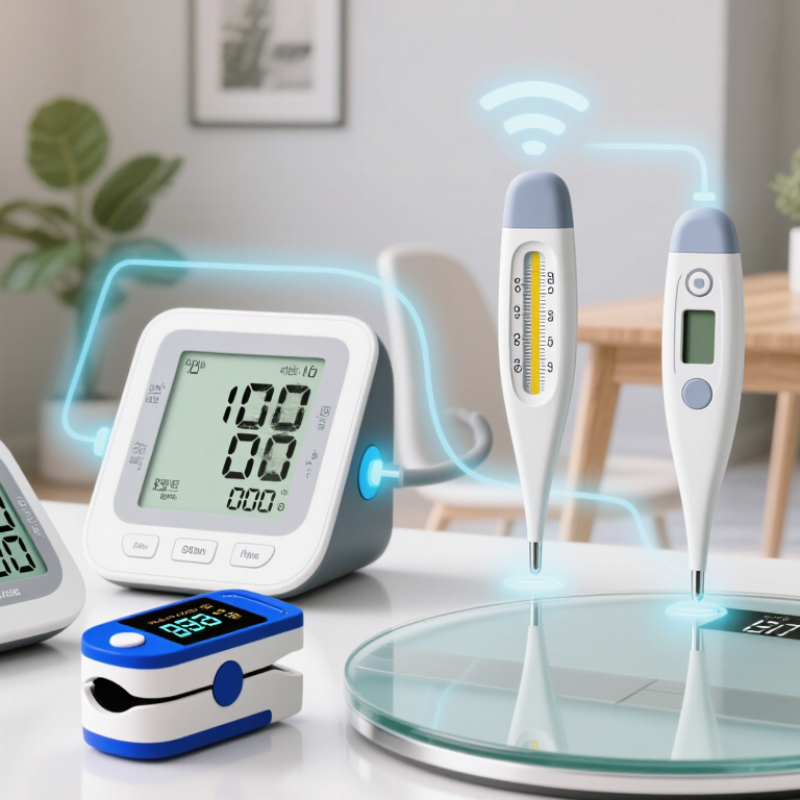
Types of Home Health Monitoring Devices Made in China
Home health monitoring devices made in China cover several everyday needs, from temperature checks to longer-term tracking. Common options include digital thermometers, upper-arm blood pressure monitors, pulse oximeters, and blood glucose meters. Many use compact displays and simple controls, while some send readings to a phone.
Other product types include portable ECG monitors, smart scales, and sleep or activity trackers. A portable ECG device can record heart rhythm for later review, but it does not replace a clinical assessment. Smart scales may show weight and estimated body-composition figures. Treat those extra figures cautiously; hydration and measurement conditions can affect them.
For buyers, useful details include measurement range, display readability, cuff or sensor fit, battery type, and cleaning instructions. Check whether the device stores readings and how easily users can export them for a healthcare appointment. Small details matter. Product specifications can look clear on paper but feel less convenient in daily use. Accuracy and usability vary between models, so compare test information and instructions rather than relying on appearance alone. A monitor is only useful when it suits the person using it.
China Top Home Health Monitoring Devices Suppliers? - Types of Home Health Monitoring Devices Made in China
| Device Type | What It Measures | Common Display or Output | Typical Home Use | Useful Selection Considerations |
|---|---|---|---|---|
| Digital blood pressure monitor | Systolic and diastolic blood pressure; many models also measure pulse rate. | Blood pressure in mmHg; pulse in beats per minute (bpm). | Recording blood pressure readings at home for discussion with a healthcare professional. | Check cuff size, upper-arm or wrist design, display readability, memory functions, and validation information. |
| Digital thermometer | Body temperature. | Temperature in °C or °F; contact and infrared models are available. | Taking temperature readings using the method specified by the device instructions. | Confirm the intended measurement site, operating instructions, cleaning requirements, and measurement range. |
| Finger pulse oximeter | Peripheral oxygen saturation (SpO₂) and pulse rate. | SpO₂ as a percentage; pulse in bpm. | Spot-checking oxygen saturation and pulse when appropriate or recommended by a clinician. | Readings can be affected by motion, circulation, skin temperature, nail products, and other factors; follow the instructions for use. |
| Blood glucose meter | Glucose concentration in a blood sample. | Usually mg/dL or mmol/L, depending on the meter configuration. | Measuring blood glucose with compatible test strips and a small blood sample. | Verify unit settings, compatible strips, sample requirements, storage instructions, and quality-control guidance. |
| Portable ECG monitor | Electrical signals of the heart; some devices also calculate a heart rate. | ECG waveform and, depending on the model, a heart-rate value in bpm. | Capturing a short single-lead or multi-lead recording for review, where appropriate. | Check the recording configuration, electrode or contact method, data export options, and limitations stated in the instructions. |
| Digital body-weight scale | Body weight; some models estimate additional values such as BMI. | Weight in kg or lb; BMI is a calculated value when height information is entered. | Tracking weight over time on a hard, level surface. | Review the stated weighing capacity, display units, repeatability information, and whether additional metrics are estimates. |
| Peak flow meter | Peak expiratory flow: the speed of air blown out after a deep breath. | Typically litres per minute (L/min). | Monitoring peak flow as part of an individualized respiratory care plan. | Use the same technique each time and follow the personal action thresholds provided by a healthcare professional. |
| Connected health monitor | Varies by device; may collect readings from compatible blood pressure, temperature, glucose, or other monitors. | Readings shown on a device screen or transferred to a phone or online record. | Organizing and reviewing home measurements over time. | Check device compatibility, connectivity requirements, data handling information, and whether readings can be exported. |
This table describes common device categories and measurement functions, not a supplier ranking. Availability, specifications, and manufacturing origin vary by product. Home monitoring readings do not replace professional medical advice.
Related Posts
-

2026 Top Hospital Monitor Buying Guide for Global Buyers?
-

10 Best Remote Patient Monitoring Software Solutions
-
China Top 10 Remote Patient Monitoring Software Providers
-

Top Benefits of Remote Patient Monitoring System for Chronic Care Management?
-
10 Best Pulse Ox Monitors for Accurate Readings?
-
What Are the Top RPM Devices for Global Buyers?