Skip to content

China Top 10 Remote Patient Monitoring Software Providers

Remote patient monitoring software is changing how care teams follow patients between appointments. A blood pressure cuff can send a morning reading before a clinic opens. A glucose monitor can reveal a pattern that might otherwise go unnoticed. These tools can support earlier attention and more consistent follow-up. They do not replace clinical judgment.

Dr. Joseph Kvedar, a physician and digital health expert, has said, “The future of health care is in the home.” That idea helps explain the growing interest in remote monitoring, but the tools still need careful evaluation. A useful platform should make readings easy to review, fit existing care workflows, and present clear alerts rather than create more noise. Privacy, accessibility, and patient comfort matter too. The details can be messy. Connectivity fails; patients may forget devices or find them difficult to use. This guide introduces ten remote patient monitoring software providers and considers the practical features that distinguish them. It is an overview, not a clinical endorsement. Needs vary by care setting, patient population, and available staff, so buyers should verify capabilities directly and assess how each platform performs in their own workflows.

China Top 10 Remote Patient Monitoring Software Providers

What Remote Patient Monitoring Software Does in China’s Healthcare System

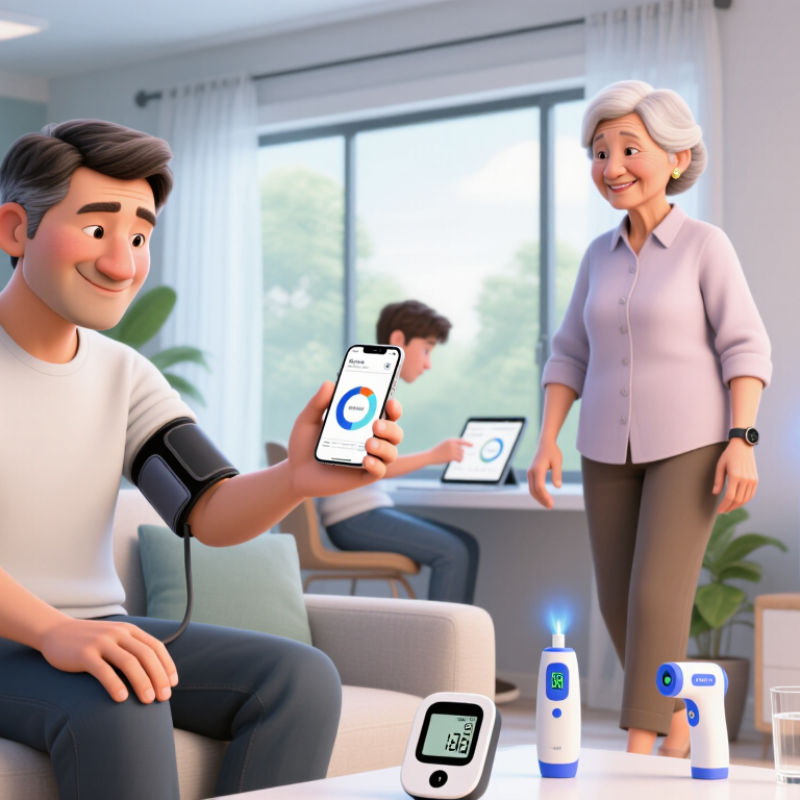
Remote patient monitoring software connects people at home with healthcare teams in hospitals and community clinics. In China, it can support follow-up care across large cities and more remote areas. A patient may use a blood pressure cuff, glucose meter, or wearable sensor. Readings can travel to a clinical dashboard, where staff review changes and decide whether contact is needed. Small details matter. A missed measurement may reflect a dead battery, not a worsening condition.

These systems can help clinicians track long-term conditions between appointments. For example, repeated high blood pressure readings may prompt a nurse to call and confirm the results. Some platforms also support reminders, symptom reports, and scheduled video consultations. This can reduce avoidable travel for patients who need routine checks. It does not replace examination or clinical judgment. Data needs context, including medication changes, daily activity, and how the device was used.

Good implementation depends on practical safeguards. Patients need clear instructions, accessible interfaces, and a simple way to report problems. Care teams need workflows for reviewing alerts, rather than a dashboard that nobody has time to check. Data quality can vary. Connectivity may be inconsistent, and some patients may struggle with device setup. That is worth admitting. Monitoring works best when it supports a real care relationship, with clinicians explaining what readings mean and what action will follow.

How to Assess Remote Patient Monitoring Software Providers

Assessing remote patient monitoring software providers requires more than comparing feature lists. Start with the clinical workflow: Can staff review blood pressure, glucose, or oxygen readings without switching between several screens? Ask for a realistic demonstration using a sample patient journey, from device setup to a flagged reading and follow-up. Small delays matter. A confusing alert queue can leave useful data unread.

Check how the software handles data quality and connectivity. Ask whether it identifies missing readings, timestamps measurements clearly, and explains how alerts are configured. Request details on integration with existing clinical records, user permissions, audit logs, and data export. These are practical checks, not decorative features. A provider should explain its security practices and service support in plain language, with documentation your technical and clinical teams can review.

Usability deserves direct testing. Invite clinicians and patients with different levels of digital confidence to try common tasks, such as pairing a device or reviewing a weekly trend. Note the number of steps, font readability, and what happens when a connection drops. Ask for references from organizations with similar patient populations and care settings. Be cautious with broad performance claims unless the provider can define the measures and share evidence. No platform removes the need for clinical judgment, and even a carefully chosen tool may require workflow changes after launch.

China’s Top 10 Remote Patient Monitoring Software Providers

China’s top remote patient monitoring software providers are best judged by how reliably they connect home measurements with clinical workflows. The field includes hospital platforms, telehealth systems, and specialist monitoring tools. A useful comparison looks beyond feature lists. Can staff review blood pressure, oxygen saturation, or glucose readings without switching between several screens? Are alerts prioritized, or does every small fluctuation create another notification?

For Chinese hospitals and care networks, language support, regional deployment options, and integration with existing medical records matter. Providers should explain how devices are validated, how data gaps appear on screen, and who responds when readings cross a threshold. Clear escalation rules are essential. So is a visible audit trail. These details help clinicians distinguish a persistent change from a single questionable measurement, such as a loose sensor or an incorrectly positioned cuff.

No ranking fits every facility. A large urban hospital may need dashboards for many patients, while a community clinic may value simple onboarding and dependable connectivity more. Ask for a practical demonstration using realistic cases, not only polished slides. Check training, technical support, and reporting options before comparing prices. One limitation remains easy to overlook: software can surface useful signals, but it cannot replace clinical judgment or fix poor measurement habits at home.

China Remote Patient Monitoring: Aging Population Context

Share of China’s population aged 65 and over, 2020–2024

The figures provide demographic context for remote patient monitoring demand; they are not a ranking or performance comparison of software providers. Source: China National Bureau of Statistics, annual statistical communiqués (2020–2024).

Comparing Provider Features, Devices, and Care Workflows

China’s remote patient monitoring software providers differ less by dashboard design than by how well devices, alerts, and clinical teams work together. A platform may support blood pressure cuffs, glucose meters, pulse oximeters, or weight scales, but device compatibility alone does not ensure useful care. Check whether readings arrive automatically, whether patients can enter symptoms, and whether clinicians can set thresholds for each condition. Small details matter: a missed upload should be visible, not mistaken for a stable reading.

Care workflows deserve equal scrutiny. Ask who reviews alerts, during which hours, and how urgent findings reach the responsible clinician. Can staff group routine readings, document follow-up calls, and escalate repeated abnormalities? These steps shape workload and patient safety. Grand View Research estimated the global remote patient monitoring market at about $14 billion in 2023, with projected growth through 2030. That forecast signals investment, not proven clinical benefit. A polished interface can still create alert fatigue. That is easy to overlook. Compare providers using a short pilot with real users, representative devices, and measured response times; document gaps honestly, because workflows often need adjustment after launch.

Deployment, Data Security, and Regulatory Considerations in China

China’s remote patient monitoring deployments should begin with clinical workflow, not device volume. A blood pressure reading has little value if no clinician owns the alert queue. Define who reviews abnormal readings, during which hours, and how patients are contacted. Keep the first rollout narrow: one clinic, one patient group, and a clear escalation protocol. Then test connectivity in real homes, where Wi-Fi may be weak and older users may need hands-on setup.

Security needs equal attention. The China Internet Network Information Center’s 53rd Statistical Report recorded 1.092 billion internet users and 77.5% internet penetration by December 2023. That scale supports digital care, but it also increases the importance of access controls, encryption, and careful data retention. China’s Personal Information Protection Law and Data Security Law affect how health information is collected, stored, and processed. Map data flows before launch, including cloud hosting, vendor access, and cross-border transfers. For software that may qualify as a medical device, assess applicable National Medical Products Administration registration requirements early. Documentation matters. A practical gap remains: teams can overestimate patient comfort with apps. Offer a phone-based alternative, and measure setup failures alongside clinical outcomes.

China Top 10 Remote Patient Monitoring Software Providers - Deployment, Data Security, and Regulatory Considerations in China

Non-branded market map: the ten rows below describe common solution-provider archetypes, not ranked or verified individual companies. Capabilities and compliance status must be confirmed for each specific product and deployment.

No. Provider archetype Typical monitoring scope Common deployment model Data security and governance checks China regulatory considerations Integration considerations Best-fit use case
1 Hospital-integrated RPM platform Vital signs, symptoms, care plans, alerts, and clinician review for discharged or chronic-care patients. Often connected to a hospital information system; on-premises, private-cloud, or approved domestic-cloud deployment may be available. Check role-based access, audit logs, encryption, retention controls, incident response, and clear allocation of hospital and supplier responsibilities. Health information is sensitive personal information under China’s Personal Information Protection Law (PIPL). Confirm a lawful processing basis, purpose limitation, necessity, and applicable consent requirements. Validate interfaces with electronic medical record, laboratory, identity, and appointment systems; agree data ownership and support responsibilities. Hospital-led follow-up and transitional care.
2 Domestic-cloud SaaS RPM platform Multi-condition monitoring dashboards, patient messaging, alerts, and population-level reporting. Vendor-operated software delivered through a cloud service; hosting location and tenant separation vary by service. Review hosting subcontractors, access controls, encryption key management, backup locations, vulnerability handling, and deletion at contract end. Assess PIPL, the Data Security Law, and the Cybersecurity Law obligations in context. Cross-border transfers require a separate assessment against current rules; do not assume all health data may be transferred freely. Confirm API availability, data export format, service availability commitments, and an exit or migration plan. Organizations seeking faster rollout without operating all infrastructure themselves.
3 On-premises or private-cloud RPM platform Remote collection and clinical review within a hospital or healthcare group’s managed environment. Installed in customer-controlled infrastructure or a dedicated private-cloud environment. Customer control of infrastructure does not remove the need for secure configuration, patching, access reviews, backups, and supplier access governance. Determine whether the relevant network system is subject to classified cybersecurity protection (MLPS); classification and required measures depend on the system and its circumstances. Plan network segmentation, identity integration, disaster recovery, capacity, and responsibility for software updates. Organizations requiring tighter infrastructure control or local integration.
4 Connected-device ecosystem platform Readings from connected blood-pressure monitors, scales, thermometers, oximeters, or glucose devices. Device-to-mobile-app-to-cloud workflow, sometimes with a clinician portal or hospital interface. Check device identity, pairing security, transmission encryption, firmware updates, data integrity, and handling of shared or lost phones. Check the intended use and applicable NMPA status of each medical device. Software that qualifies as medical-device software may also require regulatory classification and registration. Confirm device compatibility, measurement units, time stamps, calibration practices, and handling of missing or implausible readings. Home monitoring programs using multiple connected devices.
5 Chronic-disease management platform Longitudinal monitoring for conditions such as hypertension or diabetes, including adherence and care-plan tracking. Mobile patient tools with a clinician dashboard; may be SaaS, private-cloud, or hospital-linked. Minimize collection to defined care purposes; restrict access to sensitive records and provide clear patient-facing privacy information. Use additional safeguards for sensitive personal information under PIPL, including a personal information protection impact assessment where required by law. Agree clinical escalation pathways and ensure alerts are reviewed by qualified care teams rather than treated as diagnoses by default. Ongoing disease-management and follow-up programs.
6 Cardiac monitoring platform ECG or rhythm data capture, event review, symptom logs, and clinician notification workflows. Connected recorder or wearable paired with a mobile application and review portal; cloud arrangements vary. Protect high-resolution physiological data, control access to recordings, and maintain traceable review and alert records. Confirm whether the device and associated software are regulated medical devices for their intended purpose; avoid marketing claims beyond the authorized scope. Check signal quality, recording duration, clinical review coverage, alert thresholds, and escalation time expectations. Cardiology follow-up and rhythm-monitoring services.
7 Respiratory monitoring platform Oxygen saturation, respiratory symptoms, and, where supported, device-use or therapy data. Home devices connected to a patient application and care-team dashboard; deployment may be cloud-based or institution-managed. Protect continuous or frequent readings, apply least-privilege access, and document alert handling and data retention periods. Confirm the regulatory status of connected devices and software functions. Clinical decision-support claims may affect regulatory obligations depending on intended use. Define thresholds with clinical teams and test connectivity, false-alert handling, and periods when devices are offline. Respiratory follow-up and home-care monitoring.
8 Tele-rehabilitation and recovery platform Exercise sessions, mobility or functional assessments, symptoms, and recovery progress. Patient app or web service with clinician review; optional integration with motion sensors or rehabilitation equipment. Assess collection of video, audio, and movement data carefully; provide clear notice, access controls, and retention limits. Where identifiable video or health information is processed, assess PIPL requirements and any applicable separate-consent obligations for sensitive information. Check accessibility, supported devices, clinician review workflow, and how functional scores are calculated. Post-operative recovery and remote rehabilitation programs.
9 Senior-care and home-care monitoring platform Vital signs, medication reminders, activity or safety events, and caregiver notifications. Home sensors or wearables connected to a family, care-provider, or community-care portal. Set distinct permissions for patients, family members, and care staff; protect against unauthorized monitoring and excessive access. Clarify who is responsible for processing and how notices, consent, and rights requests are handled, especially where a representative acts for a patient. Test alert delivery, escalation contacts, device battery monitoring, and procedures for false alarms or missed readings. Home-based support for older adults and people needing regular assistance.
10 AI-enabled RPM analytics platform Trend analysis, risk flags, prioritization, or decision-support features using remote monitoring data. Analytics layer deployed in a cloud or institution-managed environment, often alongside a separate data-collection platform. Review model access, data provenance, logging, re-identification risk, model updates, and whether data are used for secondary purposes. Establish whether the software’s intended purpose triggers medical-device regulation. Assess PIPL and data-security requirements for training or secondary use; document human oversight and limitations. Validate performance on the intended population and workflow; define who reviews outputs and how errors are reported. Clinical teams seeking decision support or workload prioritization.

Regulatory note: China’s PIPL, Data Security Law, and Cybersecurity Law apply according to the data, organization, system, and processing context. Health information is sensitive personal information under PIPL. Data localization and cross-border transfer obligations are context-dependent, including for certain operators and data categories; they should not be assumed to apply identically to every RPM deployment. MLPS classification, NMPA registration, and other obligations should be confirmed for the specific system, device, software function, and intended use. This table is general market information, not legal advice or a vendor-compliance certification.