How to Choose Remote Patient Monitoring Solutions
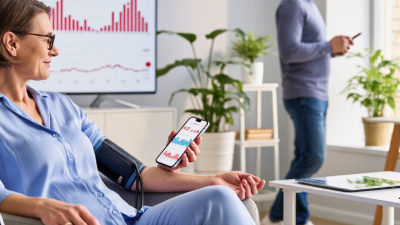
Choosing remote patient monitoring solutions is not just a technology purchase. It is a clinical and operational decision that can shape how care teams notice changes between visits. A nurse reviewing a morning dashboard needs useful readings, clear alerts, and a practical next step—not another screen full of noise. The right platform should match the patients being served, the conditions being monitored, and the staff available to respond.
Start with the care problem. A program for patients managing heart failure may need reliable weight and blood pressure readings, while another may focus on glucose trends or recovery after discharge. Check whether devices are easy to use, readings are transmitted consistently, and patients can get help when setup goes wrong. Small details count. A cuff that is hard to fasten can undermine an otherwise capable system.
Assess how the platform handles data, alert thresholds, clinical workflows, and connections with existing records. Ask vendors to demonstrate common tasks, such as reviewing a missed reading or documenting a follow-up call. Request clear information about security practices, accessibility, training, technical support, and the evidence behind claimed outcomes. Independent evaluation matters, but published results may not predict performance in every clinic. That gap deserves attention.
Cost also extends beyond the subscription. Consider devices, staff time, onboarding, replacement equipment, and ongoing support. Involve clinicians, information technology teams, administrators, and patients before making a decision. A pilot can reveal friction that a sales presentation will not. Some uncertainty will remain. The goal is not to find a flawless product, but to choose remote patient monitoring solutions that fit real workflows, support safe follow-up, and can be evaluated with meaningful measures over time.
Define the Clinical Need Before Comparing Remote Monitoring Solutions
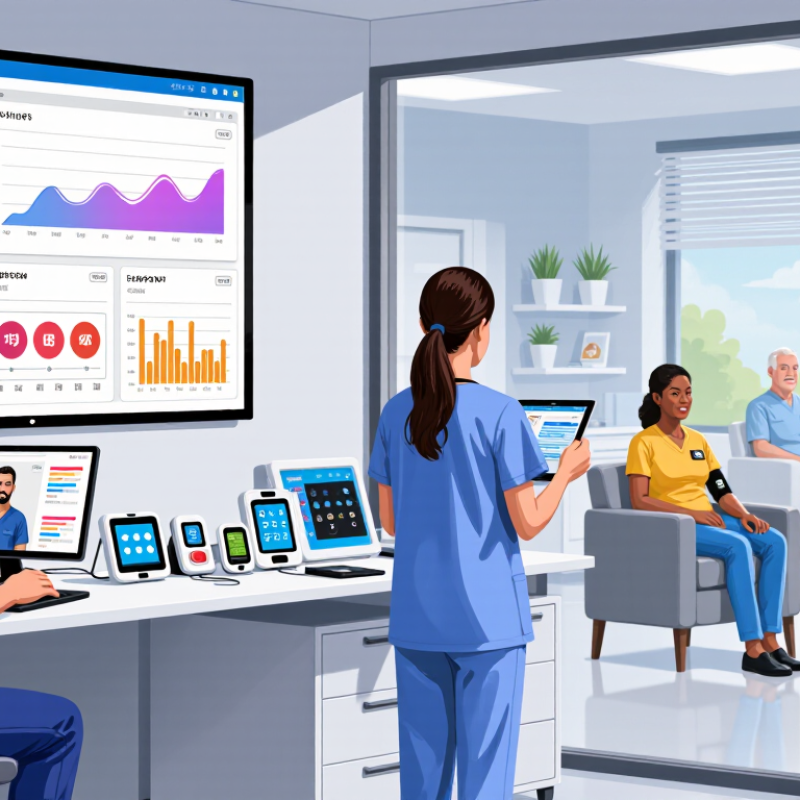
Before comparing remote patient monitoring solutions, define the clinical problem in measurable terms. Is the goal earlier detection of worsening heart failure, safer blood pressure control, or support after discharge? Specify which patients qualify, what readings matter, and who responds when a reading crosses a threshold. “Monitor chronic disease” is too broad to guide a useful comparison.
The patient population shapes the design. The CDC’s National Diabetes Statistics Report, 2022, estimated that 37.3 million people in the United States had diabetes in 2019. That scale does not mean every patient needs continuous monitoring. Identify who faces avoidable complications, what data could change care, and how often readings are needed. The American Medical Association’s 2022 Digital Health Research found that 85% of physicians saw at least some advantage in digital health tools. But perceived value is not proof that a particular monitoring workflow fits a clinic.
Map the work around each reading: device setup, patient reminders, review time, escalation, and documentation. A blood pressure cuff may look simple on a comparison sheet. Yet missed readings, poor technique, or unclear ownership can weaken the signal. Be honest about staffing limits. A small pilot may uncover them. Ask patients to test the instructions at home, then watch where they hesitate. Some assumptions will be wrong. Which clinical decision would change after receiving this data? If none would, reconsider the monitoring need.
Confirm FDA Device Status and CMS’s 16-Day Data Rule for CPT 99454
When comparing remote patient monitoring solutions, check the exact device and its intended use, not just the software dashboard. Confirm its FDA status through reliable documentation. FDA registration or listing alone does not mean a device has been cleared or authorized for every claimed use. Ask how the vendor records device details, data timestamps, and transmission failures. These records matter when a patient’s readings appear incomplete.
For CPT 99454, CMS generally requires data from at least 16 days in a 30-day period. A device that collects readings but cannot show when they were received may complicate billing review. Ask for a sample report showing daily measurements, gaps, and patient-level transmission history. Sixteen days sounds simple. The workflow often isn’t. Patients may forget to use a scale, lose connectivity, or need help pairing a blood-pressure cuff. A useful solution makes these problems visible without treating every missing reading as patient noncompliance.
Check current CMS guidance and payer requirements before relying on a vendor’s billing claims; policies can change, and payer rules may differ. Confirm that the monitoring process supports clinical follow-up, including who reviews alerts and how quickly concerns are escalated. One detail is easy to overlook: a technically compliant device does not guarantee meaningful care. Clinicians still need clear, usable readings and a realistic plan for responding to them.
Choosing Remote Patient Monitoring Solutions
FDA device status and the 16-day data threshold commonly associated with CPT 99454
How to read this chart: CPT 99454 generally requires device-supply and data-transmission requirements to be met over a 30-day period, including readings on at least 16 days. The 18-day example is illustrative, not patient or claims data.
Device check: Confirm the device meets the FDA definition of a medical device and verify any applicable FDA authorization. Coverage and billing requirements can vary by payer; meeting the data threshold alone does not guarantee payment.
Compare Condition-Specific Evidence: Cochrane Found 20% Lower HF Mortality
Remote patient monitoring should be judged against the condition it is meant to support. For heart failure, a Cochrane review of randomized trials reported that non-invasive telemonitoring was associated with 20% lower all-cause mortality (risk ratio 0.80) and 29% fewer heart-failure-related hospitalizations (risk ratio 0.71). These are relative reductions, not guarantees for an individual patient. Importantly, the 20% figure refers to all-cause mortality, not heart-failure mortality specifically. That distinction matters.
When comparing solutions, check what patients measured, how often clinicians reviewed alerts, and whether the study included people like those in your care setting. A morning weight on a bathroom scale, for example, is useful only if a meaningful gain prompts timely clinical follow-up. The Cochrane findings support monitoring as part of care, not as a substitute for it. Evidence also varies across devices and programs; results from one setup may not transfer neatly to another.
Look for absolute outcomes, follow-up duration, and confidence intervals—not just a headline percentage. The 2022 AHA/ACC/HFSA heart-failure guideline emphasizes multidisciplinary care and ongoing monitoring, which helps frame technology as one component of support. Ask who responds to alerts overnight and how missed readings are handled. Practical details can be less polished than a trial protocol. I would still want stronger evidence for the exact workflow before assuming a new system will reproduce trial results.
How to Choose Remote Patient Monitoring Solutions - Compare Condition-Specific Evidence: Cochrane Found 20% Lower HF Mortality
Compare solutions by the condition-specific outcomes they measure, the evidence supporting the care model, and how results are used by the clinical team. Evidence for remote monitoring depends on the condition and intervention; results should not be assumed to apply across populations.
| Condition |
Evidence-based outcome |
Study finding |
What to compare in an RPM solution |
Evidence interpretation |
| Heart failure (HF) |
All-cause mortality and HF-related hospitalization |
In a Cochrane review, non-invasive telemonitoring was associated with lower all-cause mortality (RR 0.80, 95% CI 0.68–0.94) and fewer HF-related hospitalizations (RR 0.71, 95% CI 0.60–0.83) compared with usual care. |
Support for relevant measures such as weight, symptoms, blood pressure, and heart rate; clear alert thresholds; timely clinical review; and documented escalation pathways. |
Condition-specific evidence
Review findings support telemonitoring for some HF care models. Confirm that the solution and service workflow resemble the interventions studied. |
| Hypertension |
Systolic blood pressure at 12 months |
In the TASMINH4 randomized trial (1,182 participants), self-monitoring with telemonitoring to guide medication titration lowered clinic systolic blood pressure by an adjusted 4.7 mmHg versus usual care at 12 months (95% CI 2.4–7.0 mmHg lower). |
Validated home blood pressure device; reliable data transmission; clinician review and medication-titration workflow; patient training; and a plan for out-of-range readings. |
Results apply to a supported blood-pressure monitoring and treatment pathway, not simply to collecting readings without clinical action. |
| Cross-condition implementation |
Usability, response time, and continuity of care |
Clinical benefit depends on the population, monitoring protocol, and care response. The two studies above evaluated specific interventions and outcomes, rather than every available RPM product. |
Check device accuracy, accessibility, patient adherence, interoperability, alert burden, staffing coverage, escalation rules, and reporting of clinical outcomes. |
Choose a solution whose measured data and operational workflow match the target condition and the evidence-informed care pathway. |
Important clarification: The Cochrane estimate of RR 0.80 refers to all-cause mortality in people with heart failure—not specifically HF-cause mortality. It represents a relative estimate; it does not mean that every program will reduce an individual patient’s absolute risk by 20%.
- Inglis SC et al. Structured telephone support or non-invasive telemonitoring for patients with heart failure. Cochrane Database of Systematic Reviews, 2015. doi:10.1002/14651858.CD007228.pub3.
- Tucker KL et al. Self-monitoring of blood pressure in hypertension: a systematic review and individual patient data meta-analysis. TASMINH4 trial, The Lancet, 2018. doi:10.1016/S0140-6736(18)30309-7.
Assess Staffing and Billing: CMS CPT 99457 Requires 20 Minutes of Care
When comparing remote patient monitoring solutions, ask how each supports the 20-minute requirement for CPT 99457. The code generally covers the first 20 minutes of remote physiologic monitoring treatment management in a calendar month, including interactive communication with the patient or caregiver.
A dashboard showing readings is not enough by itself.
Plan who will review alerts, contact patients, and document clinical decisions. For example, a nurse may review a blood pressure trend, call the patient about repeated high readings, and record the discussion and next steps.
The time record should identify the date, staff member, activity, and minutes spent. Avoid counting routine administrative work as clinical treatment management.
Small details matter.
Staffing can make the difference. Estimate patient volume, alert frequency, and time needed for follow-up before choosing a platform. A tool that makes outreach easy may still create an unmanageable queue.
That is easy to underestimate.
Review your workflow after launch; actual call times may differ from planning estimates. Keep documentation clear enough for another clinician to understand what happened. Billing rules and payer guidance can change, so confirm current requirements with qualified billing staff before submitting claims. A careful process protects both patient care and billing accuracy.
Check HIPAA Safeguards, EHR Integration, and Plans for Scaling the Program
Choosing a remote patient monitoring solution means looking beyond the device. For covered healthcare organizations, confirm that privacy and security safeguards match the program’s needs. Review encryption, role-based access, audit logs, data retention, and incident-response procedures. Ask whether a business associate agreement is available when applicable, and who can access patient readings. Paper promises are not enough. Request clear answers about outages, account removal, and how security concerns are reported.
EHR integration should fit existing clinical workflows, not create a second inbox. Check whether readings, alerts, and patient notes can be mapped to the right records. Ask staff to test common cases, such as a missed blood-pressure reading or an alert requiring follow-up. Test it live. A polished demo may not reveal duplicate entries, delayed updates, or extra clicks. These details can affect whether clinicians use the system consistently.
Scaling requires more than adding devices. Estimate how many patients staff can support, who reviews alerts, and how coverage changes after hours. Confirm that the solution can handle larger data volumes and new care teams without a costly redesign. Start with a small pilot, then track enrollment, alert volume, response times, and staff workload. Growth is messy. A pilot may expose gaps in training or staffing, and that is useful—even if the original plan looked solid.