What Are the Top Types of Custom Tractor Trailers?
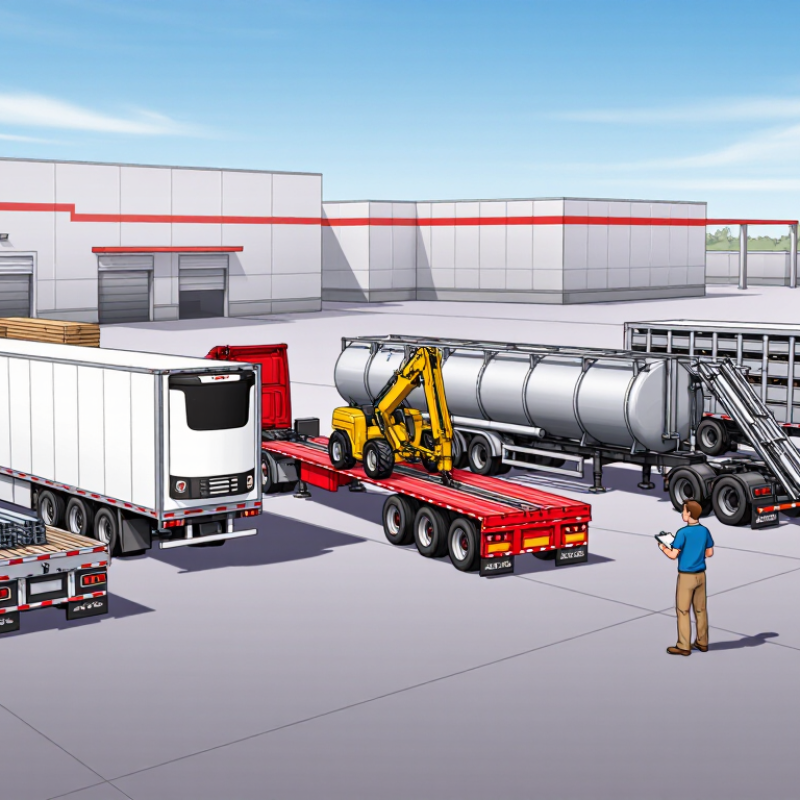
Custom Tractor Trailers are built around a job, not just a truck and a trailer. A flatbed carries steel beams and lumber in the open. A dry van protects boxed freight from rain and road grit. Refrigerated models keep produce cold, while lowboys carry tall equipment closer to the pavement. Tankers, dump trailers, livestock trailers, and extendable models serve different loads and routes. The right choice depends on cargo weight, loading method, deck height, turning space, and how often the trailer will work. Small details matter. A few inches can change loading access.
For this guide, fictional fleet-design specialist Evan Cole offers an illustrative principle: “Choose the trailer for the hardest regular job, not the easiest one.” Treat that as a starting point, not a universal rule. A highly specialized build may save time on one route but sit idle elsewhere. A versatile trailer can be less efficient for a specific load. No layout wins every time. This outline compares leading Custom Tractor Trailers by their common uses, practical strengths, and trade-offs. It also considers material choices, axle configurations, and features such as ramps, sliding components, or temperature control. Specifications should be checked against the actual cargo and operating conditions. Even a tidy spec sheet can miss a real-world constraint. The goal is a clearer shortlist, not a one-size-fits-all answer.
How Custom Tractor Trailers Are Classified
Custom tractor-trailers are classified by configuration and intended work, not by customization alone. A practical specification separates the tractor, trailer body, running gear, and duty cycle. Tractor labels may describe a day cab or sleeper, plus an axle layout such as 4x2 or 6x4. Trailer classes include dry vans, refrigerated vans, flatbeds, tankers, and low-loaders. Axle count and coupling geometry further distinguish combinations. Fit matters. A refrigerated body needs suitable insulation and cooling capacity; a flatbed needs the right deck length and securement points.
This approach aligns with how transport agencies count vehicles. FHWA’s Traffic Monitoring Guide groups traffic into 13 classes, using axle and vehicle configuration to distinguish combinations. That framework supports consistent counting, but does not capture every custom feature. Buyers should also classify equipment by cargo dimensions, loading method, route conditions, and expected mileage. These details affect design choices. ATRI’s An Analysis of the Operational Costs of Trucking: 2024 Update reported average marginal operating costs of $2.27 per mile for 2023. This is an industry-wide benchmark, not a cost forecast for any trailer type. Class boundaries can be fuzzy. Unusual loads may call for a blended specification, which deserves a second look.
What Are the Top Types of Custom Tractor Trailers?
Trailer types are commonly classified by their construction and the cargo they carry. The chart compares typical length ranges for several common configurations; actual dimensions vary by design and application.
Dry vans, refrigerated trailers, flatbeds, and step decks are commonly available in 48- to 53-foot configurations. Tanker trailer lengths vary with tank design and application; the range shown is illustrative, not a universal specification.
Custom Flatbed and Step-Deck Trailers
Custom flatbed trailers suit cargo that needs open access from the sides, rear, or above. Their level deck can carry bundled lumber, steel sections, machinery, and other loads that do not require a roof. With no fixed walls, crews can position cargo using different loading methods, but they must plan securement carefully. A loose chain or poorly placed tie-down can let a load shift during travel.
Deck length, axle capacity, and tie-down placement should match the cargo and hauling equipment. For example, a 48-foot deck may offer useful space for long materials, while added length can make turning and maneuvering harder. Small details matter. Check the deck surface, stake pockets, and rub rails against the job’s needs before ordering a custom build.
Step-deck trailers have a higher front deck and a lower main deck, creating extra clearance for taller cargo. This can help operators move certain loads without exceeding height limits along a route. The lower deck also changes ramp angles and loading height, so equipment access deserves attention. A design that works well for one machine may be awkward for another. It is worth reviewing actual cargo dimensions, loading routines, and route conditions together; assumptions made early can lead to an expensive mismatch.
Lowboy and Heavy-Haul Trailers
Lowboy and heavy-haul trailers are built for loads that ordinary flatbeds may not handle efficiently. A lowboy’s dropped deck keeps tall equipment closer to the road, helping preserve overhead clearance. Its loading angle and deck height matter. Small differences can affect how safely a machine reaches the deck.
A detachable gooseneck can make loading self-propelled equipment easier. The trailer’s axle arrangement should match the cargo’s weight and distribution, not just its total weight. For example, a compact excavator may concentrate weight near its tracks, while a long machine spreads it differently.
Check deck length, width, ramp design, and tie-down locations against the actual load. Measure twice.
Heavy-haul configurations may use multiple axle groups to distribute substantial loads. Suspension type, turning space, tire capacity, and route conditions also deserve attention. A low deck is useful, but it does not solve every clearance problem; bridges, slopes, and tight site entrances can still complicate a move. That is easy to overlook.
Before ordering a custom trailer, have a qualified designer review equipment dimensions, loading procedures, and expected routes. Leave room for future needs, but avoid paying for capacity you will rarely use. The right specification is not always obvious, and a second review can catch assumptions made too early.
Tanker and Bulk-Material Trailers
Custom tanker trailers are designed around the liquid’s behavior, not capacity alone. Tank material, insulation, baffles, pumps, and hose placement affect handling. Food-grade liquids may require smooth, cleanable interiors and dedicated fittings. Corrosive materials need compatible linings and seals. Small details matter. A poorly placed valve can make routine unloading awkward.
Bulk-material trailers move powders, grains, pellets, and aggregates using hoppers, pneumatic systems, or walking floors. Design choices depend on flow, moisture sensitivity, discharge access, and route conditions. A steep hopper may empty faster, but it can increase trailer height. There is no perfect setup. Test unloading with the actual material; damp conditions can make otherwise free-flowing cargo bridge or cling.
The U.S. Census Bureau’s 2022 Commodity Flow Survey recorded 11.5 billion tons of domestic freight shipments across transportation modes. It does not separate tanker or bulk-trailer volumes, so that figure is useful context, not a buying benchmark. Compare it with route-level load records, tare weight, maintenance history, and unloading times. Custom equipment should address a measured operating problem, not simply add features.
Livestock and Specialized Cargo Trailers
Livestock and specialized cargo trailers are built around the load, not just the road. The USDA’s 2022 Census of Agriculture counted 87.2 million cattle and calves on U.S. farms, underscoring the scale of livestock handling and transport.
A livestock trailer needs steady airflow, secure partitions, a durable non-slip floor, and a ramp that does not become slick after washing. Details matter. A poorly placed divider can restrict movement, while crowded loading can raise stress and injury risks. The right layout depends on animal size, trip length, and loading conditions.
Specialized cargo trailers serve equipment, agricultural products, and other loads that need tailored protection or access. The American Trucking Associations’ 2023 American Trucking Trends report says trucks moved 11.46 billion tons of U.S. freight in 2022, about 72.6% of domestic freight tonnage.
That broad figure is not a trailer sales measure, but it shows how much freight depends on road transport. For machinery, low-deck designs can simplify loading; for sensitive cargo, sealed interiors and adjustable tie-down points can help limit exposure and shifting. Small oversights count. I would still check turning clearance and axle loads against the actual cargo, because a clean spec sheet can miss awkward real-world handling.
