
China Top UV Lamp Price How Much Does It Cost?
When buyers search for “Uv Lamp Price” in China, they often expect one simple number. In practice, the cost depends on lamp type, power, wavelength, housing materials, and order quantity. A compact 9-watt UV lamp may suit small curing tasks, while industrial units require stronger output, cooling systems, and tested components.
This guide explains the main prices buyers may encounter from Chinese manufacturers and trading companies. It considers low-volume samples, standard wholesale orders, and customized production. Supplier location also matters. A factory in Shenzhen may quote differently from one in Jiangsu, even for a similar lamp. Shipping, packaging, certifications, and after-sales support can change the final cost significantly.
Numbers need context. A very low quotation may exclude the power supply, control system, or protective housing. That is easy to miss. Buyers should request a complete specification sheet, including UV wavelength, irradiance, service life, electrical input, and warranty terms. Product photos are useful, but test reports are more reliable. Still, even laboratory data may not reflect performance in your equipment.
The discussion will also compare budget products with professional models. It will examine whether customization is worth the added expense and how minimum order quantities affect pricing. Some estimates may vary as component costs and freight rates change. That uncertainty deserves attention. A careful purchasing decision should balance price, verified performance, supplier experience, and long-term operating costs rather than choosing the cheapest offer.
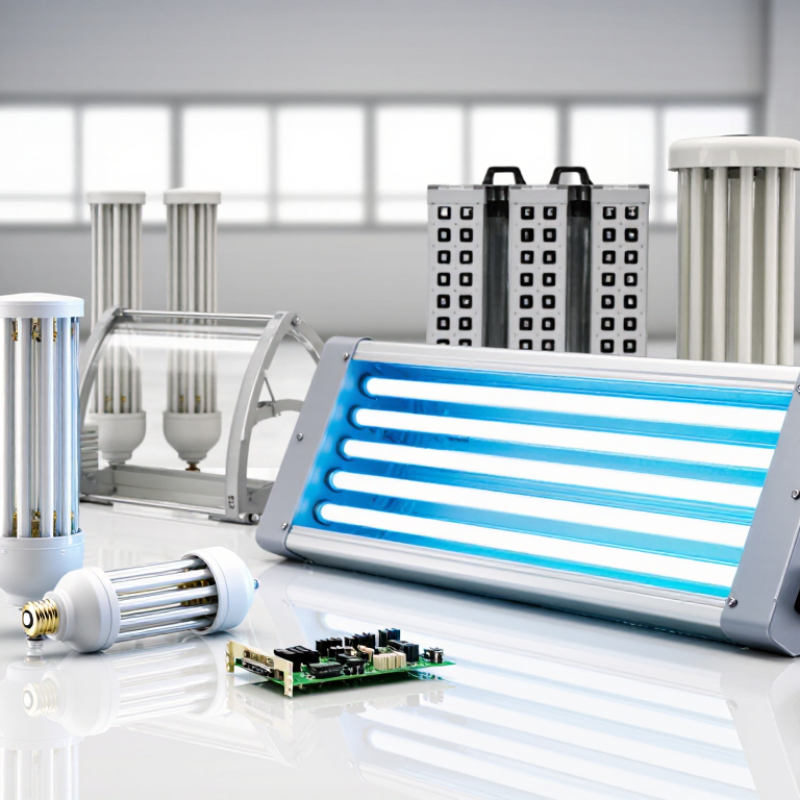
What Is a UV Lamp and What Are Its Main Applications?
A UV lamp produces ultraviolet radiation outside the visible light spectrum. Its wavelength determines its practical purpose. UVA lamps support curing, fluorescence inspection, and certain industrial processes. UVB has specialized technical uses. UVC is commonly used for controlled air, water, and surface disinfection.
In China, UV lamp prices vary widely. Small curing or inspection lamps may cost about 20 to 150 US dollars. Professional systems can range from several hundred to several thousand dollars. Output power, wavelength accuracy, cooling, lamp life, and safety housing affect the final price. A low price is not always economical. Weak irradiance may increase processing time and reduce results. I have seen buyers compare wattage only, which is a common mistake.
Tips: Ask for irradiance data, not only electrical power. Check the measured wavelength and replacement cost. For UVC equipment, use shielding, interlocks, and clear warning labels. Never expose skin or eyes directly. Test the lamp at the actual working distance, because performance changes quickly with distance. Certification and factory testing also matter. Specifications can look convincing, yet field results may still disappoint.
China Top UV Lamp Price: How Much Does It Cost? — What Is a UV Lamp and What Are Its Main Applications?
A UV lamp is a light source that emits ultraviolet radiation, commonly used for curing, disinfection, inspection, phototherapy, and industrial processing. The indicative prices below are typical China wholesale price ranges in USD per unit for standard, non-branded products and may vary according to output, customization, quantity, power supply, certification, and shipping terms.
| UV Lamp Type | Typical Wavelength | Typical Power Range | Indicative China Wholesale Price | Estimated Service Life | Main Applications | Key Advantages | Important Considerations |
|---|---|---|---|---|---|---|---|
| Low-Pressure Mercury UV Lamp | 254 nm; some models also produce 185 nm | 4–150 W | US$8–80 | 8,000–12,000 hours | Water disinfection Air purification Surface treatment | High germicidal efficiency and relatively low operating cost | Contains mercury; output decreases with operating hours and lamp temperature |
| Medium-Pressure Mercury UV Lamp | Broad UV spectrum, approximately 200–600 nm | 1–30 kW | US$120–1,500 | 1,000–3,000 hours | Industrial curing Printing Coatings Wastewater treatment | High intensity and fast processing speed | Generates substantial heat and requires suitable cooling and shielding |
| UV-C LED Module | Typically 260–280 nm | 0.5–100 W optical or electrical output, depending on design | US$15–300 | 5,000–20,000 hours, depending on temperature and drive current | Point-of-use disinfection Sensors Medical equipment Water systems | Compact, mercury-free, instant start, and easy electronic control | Higher initial cost per watt; thermal management is critical |
| UV-A LED Lamp | 365 nm, 385 nm, 395 nm, or 405 nm | 3–200 W | US$10–250 | 10,000–30,000 hours | Resin curing Adhesive curing Forensic inspection Counterfeit detection | Long service life, low heat compared with arc lamps, and precise wavelength options | Curing performance depends on irradiance, exposure distance, and material formulation |
| UV Curing Metal-Halide Lamp | Approximately 250–450 nm | 1–20 kW | US$100–1,200 | 800–2,000 hours | Wood coatings Electronics Printing inks Industrial coatings | Strong curing capability across a broad spectral range | Requires a ballast, reflector, ventilation, and regular replacement |
| Excimer UV Lamp | Commonly 172 nm, 222 nm, or 308 nm | 10–1,000 W, depending on lamp size | US$300–5,000 | 1,000–8,000 hours | Surface activation Photochemical processing Semiconductor processes Specialized disinfection | Produces narrow-band, high-energy ultraviolet radiation | Usually needs dedicated power equipment, controlled airflow, and ozone management for certain wavelengths |
| UV Fluorescent Inspection Lamp | Commonly 365 nm or 254 nm | 4–40 W | US$12–100 | 5,000–10,000 hours | Leak detection Mineral inspection Forensics NDT inspection | Affordable and suitable for portable inspection equipment | Requires appropriate filters and eye protection; intensity is lower than many industrial UV sources |
| Phototherapy UV Lamp | Usually narrow-band UV-B at 311–313 nm; UVA models are also available | 9–100 W | US$40–500 | 1,000–3,000 hours | Clinical phototherapy Dermatology Controlled laboratory use | Can provide a controlled therapeutic wavelength | Medical use requires qualified supervision, dosage control, and applicable regulatory compliance |
| UV Nail and Resin Curing Lamp | Typically 365 nm, 395 nm, or a dual 365/405 nm output | 24–168 W input power | US$8–80 | LED models commonly provide 10,000–50,000 hours | Nail gel curing Craft resin Small adhesive jobs | Low purchase cost, compact design, and simple operation | Rated electrical power does not equal UV optical output; curing results vary by formulation and lamp geometry |
Price reference: The ranges are indicative estimates for standard products supplied in China, generally excluding taxes, certification fees, tooling, freight, and installation. UV-C radiation can damage skin and eyes, and ozone-producing lamps require adequate ventilation and safety controls.